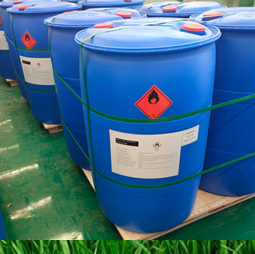
Heptane: Properties, Industrial Applications, Safety, and Global Sourcing
In the world of industrial chemistry, few solvents possess the versatility and reliability of Heptane ($C_7H_{16}$). Whether you are involved in pharmaceutical manufacturing, laboratory research, or industrial degreasing, understanding the nuanced characteristics of this alkane is essential. At ChemicalsSuppliers.com, we provide high-purity chemical solutions to meet the growing global demand for premium-grade solvents.
This comprehensive guide explores everything you need to know about n-Heptane and its isomers, providing a deep dive that exceeds standard industry overviews.
1. What is Heptane? Understanding the Chemical Backbone
Heptane is a straight-chain alkane with the chemical formula $CH_3(CH_2)_5CH_3$. It is a colorless, volatile, and highly flammable liquid belonging to the paraffin family. In the chemical industry, it is often referred to as “Normal Heptane” or “n-Heptane” to distinguish it from its branched isomers, like isoheptane.
Chemical Properties at a Glance
- CAS Number: 142-82-5
- Molecular Weight: 100.20 g/mol
- Boiling Point: 98.4°C (209.1°F)
- Density: 0.684 g/cm³ at 20°C
- Solubility: Insoluble in water; highly soluble in ether, acetone, and chloroform.
Because of its non-polar nature, heptane is the industry standard for organic synthesis and extraction processes. It is widely used as a reference fuel for octane ratings because n-heptane is defined as having an octane number of zero.
2. Industrial Applications: Why Global Markets Rely on Heptane
Pharmaceutical Extraction and Synthesis
The pharmaceutical sector is the largest consumer of high-purity n-heptane. It is favored for its low toxicity compared to other solvents and its ability to be easily removed through evaporation. It is frequently employed in the recrystallization of active pharmaceutical ingredients (APIs).
Automotive and Fuel Testing
The petroleum industry uses n-heptane as a primary reference material. In the “Octane Rating” system, a mixture of heptane and isooctane determines how well a fuel resists “knocking” during combustion.
Adhesive and Rubber Manufacturing
Heptane acts as a powerful solvent for rubbers and resins. It is a core component in rubber cement and adhesive formulations, allowing for the precise application of bonding agents in the construction and shoe-manufacturing industries.
Laboratory and Analytical Research
In chromatography (HPLC), heptane is used as a non-polar solvent phase. Its low boiling point and high purity levels allow researchers to isolate complex chemical compounds with minimal noise in signal detection.
3. Heptane Pricing Trends (2024-2025)
Pricing for heptane fluctuates based on crude oil distillation yields, geographical availability, and purity requirements (e.g., HPLC Grade vs. Technical Grade).
| Grade |
Purity Level |
Estimated Price (per 200L Drum) |
| Technical Grade |
95-97% |
$450 – $600 USD |
| HPLC/Spectroscopic |
99%+ |
$850 – $1,200 USD |
| Electronic Grade |
99.9%+ |
$1,500+ USD |
Note: Prices are estimates and subject to current market volatility. For real-time quotes, visit ChemicalsSuppliers.com.
4. 50 Examples of Heptane-Related Chemicals and Solvents
To provide a complete resource, here are 50 associated industrial chemicals and derivatives often ordered alongside heptane:
- n-Heptane (CAS 142-82-5)
- 2-Methylhexane
- 3-Methylhexane
- 3-Ethylpentane
- 2,2-Dimethylpentane
- 2,3-Dimethylpentane
- 2,4-Dimethylpentane
- 3,3-Dimethylpentane
- 2,2,3-Trimethylbutane
- Hexane (n-Hexane)
- Octane (n-Octane)
- Cyclohexane
- Methylcyclohexane
- Isooctane (2,2,4-Trimethylpentane)
- Toluene
- Xylenes (Mixed)
- Methanol (HPLC Grade)
- Ethanol (Absolute)
- Isopropyl Alcohol (IPA)
- Acetone
- Ethyl Acetate
- Chloroform
- Dichloromethane (Methylene Chloride)
- Diethyl Ether
- Tetrahydrofuran (THF)
- Acetonitrile
- Petroleum Ether
- Pentane
- Nonane
- Decane
- Benzene
- Carbon Tetrachloride (Historical/Limited)
- Dimethyl Sulfoxide (DMSO)
- Dimethylformamide (DMF)
- N-Methyl-2-pyrrolidone (NMP)
- Propylene Glycol
- Glycerol
- Butanone (MEK)
- Cyclopentane
- Heptan-2-one
- Heptan-3-one
- Heptan-4-one
- 1-Heptene
- 2-Heptene
- 3-Heptene
- Heptanoic Acid
- Heptanol (n-Heptyl Alcohol)
- Heptylamine
- Heptyl Acetate
- Heptyl Chloride
5. Safety Protocols and Handling
Heptane is a Class 3 Flammable Liquid. Safety is paramount when handling, transporting, or storing this solvent.
- Ventilation: Always work in a well-ventilated area or under a fume hood.
- PPE: Use nitrile gloves, splash-resistant goggles, and a lab coat. In cases of high exposure, use a respirator with organic vapor cartridges.
- Storage: Store in a cool, dry, well-ventilated warehouse away from oxidizers and open flames. Use grounded containers to prevent static discharge sparks.
For detailed Safety Data Sheets (SDS), consult the ECHA (European Chemicals Agency) or visit our documentation portal at ChemicalsSuppliers.com.
6. How to Buy Heptane from ChemicalsSuppliers.com
At ChemicalsSuppliers.com, we streamline the chemical procurement process globally. To order:
- Visit our Product Page: Navigate to our solvent index.
- Request a Quote: Specify your required purity (Technical or HPLC grade) and volume (bulk drums or ISO tanks).
- Certification: All shipments come with a Certificate of Analysis (COA) to ensure compliance with your local regulations.
- Logistics: We utilize safe, ADR-compliant freight to ensure your order arrives safely at your facility.
7. Global Multi-Language Search Indexing
To assist our international clients, we provide the translation of “Heptane” and “Industrial Solvent” in multiple languages to aid your local search requirements:
- Mandarin Chinese: 正庚烷 (Zhèng gēng wán)
- Hindi: हेप्टेन (Heptane)
- Spanish: Heptano
- Arabic: هبتان (Heptan)
- French: Heptane
- Korean: 헵탄 (Heptan)
- Yue Chinese (Cantonese): 正庚烷
- Portuguese: Heptano
- Indonesian: Heptana
- Russian: Гептан (Geptan)
- German: Heptan
- Japanese: ヘプタン (Heputan)
- Vietnamese: Heptan
- Wu Chinese (Shanghainese): 正庚烷
- Turkish: Heptan
8. Conclusion
Heptane remains an indispensable tool for modern chemistry. Whether it is benchmarking fuel quality or facilitating life-saving pharmaceutical research, its role is foundational. By choosing a reliable partner like ChemicalsSuppliers.com, you ensure that your industrial processes are backed by high-purity materials and professional supply chain management.
Visit us today to explore our full inventory and receive a competitive quote for your bulk chemical needs.
Disclaimer: All chemicals should be handled by trained professionals. Refer to your local government regulations and individual SDS before use. Visit ChemicalsSuppliers.com for detailed technical documentation.