Undenatured Ethanol: Pure Ethyl Alcohol, Pricing, Applications & Where to Buy
Undenatured ethanol, also referred to as non-denatured ethanol, pure ethyl alcohol, food-grade ethanol, pharmaceutical ethanol, or simply absolute ethanol (in its anhydrous form), is ethanol in its natural, chemically unaltered state. Unlike its denatured counterpart, which contains added poisonous or foul-tasting additives such as methanol, isopropanol, or denatonium benzoate, undenatured ethanol contains no bittering agents, no toxins, and no foreign chemicals. This purity is what makes it the preferred choice across pharmaceutical manufacturing, cosmetics and personal care, food and beverage processing, laboratory research, and high-end industrial solvent applications.
Because undenatured ethanol is safe for human contact and consumption (in regulated contexts), it commands a premium price over denatured or industrial-grade ethanol and is subject to strict excise tax and licensing regulations in most jurisdictions. In this comprehensive guide, we explore everything a procurement professional, formulator, laboratory manager, or manufacturer needs to know about undenatured ethanol—from its chemical identity and purity grades to current market pricing, a detailed list of nearly 50 related chemical products, and exactly where to buy high-quality material at competitive rates from [chemicalssuppliers.com](https://www.chemicalssuppliers.com/).
What Is Undenatured Ethanol? Understanding the Chemistry
Ethanol (C₂H₅OH), also known as ethyl alcohol, grain alcohol, or drinking alcohol, is a clear, colorless, volatile, and flammable liquid with a characteristic mild odor. It is a simple two-carbon primary alcohol produced primarily through the fermentation of sugars by yeast, followed by distillation and, where required, dehydration to remove residual water. The term “undenatured” refers specifically to ethanol that has not been deliberately rendered unfit for drinking through the addition of denaturants.
The distinction is critical in both regulatory and practical terms:
-
Undenatured (non-denatured) ethanol retains its potable character and is suitable for food, beverage, pharmaceutical, and cosmetic use where purity and safety are paramount.
-
Denatured ethanol (also called methylated spirits, denatured alcohol, or SD alcohol) has been laced with additives to exempt it from beverage alcohol taxes. It is cheaper but restricted to industrial, fuel, and cleaning applications.
Chemically, ethanol is a versatile molecule that serves as a solvent, a chemical intermediate, a fuel, a disinfectant, and a precursor for the synthesis of esters, ethers, and many other organic compounds. Its polarity, combined with a non-polar hydrocarbon tail, allows it to dissolve both polar and non-polar substances, making it one of the most widely used solvents on the planet.
Key Physical & Chemical Properties
| Property |
Value |
| Chemical formula |
C₂H₅OH |
| Molar mass |
46.07 g/mol |
| Appearance |
Clear, colorless liquid |
| Density (20 °C) |
0.789 g/cm³ |
| Boiling point |
78.37 °C (172.5 °F) |
| Melting point |
−114.1 °C |
| Flash point |
14 °C (closed cup) |
| Autoignition temperature |
363 °C |
| Solubility |
Fully miscible with water and most organic solvents |
| CAS Number |
64-17-5 |
These properties underpin ethanol’s dominance in industries ranging from healthcare to automotive fuel blending.
Undenatured vs. Denatured Ethanol: The Complete Comparison
Understanding the difference between these two forms of the same molecule is essential for purchasing the right material for your application. The table below summarizes the core distinctions:
| Feature |
Undenatured Ethanol |
Denatured Ethanol |
| Purity |
High; no adulterants |
Contains methanol, isopropanol, or bittering agents |
| Taste/odor |
Neutral, clean |
Foul or toxic |
| Safety for consumption |
Yes (when food-grade) |
No—poisonous |
| Regulatory category |
Potable alcohol (taxed) |
Non-potable (tax-exempt) |
| Typical applications |
Pharma, food, cosmetics, labs |
Fuels, industrial solvents, cleaners |
| Relative cost |
Higher |
Lower |
| Common synonyms |
Pure alcohol, grain alcohol, ethyl alcohol |
Methylated spirit, SD alcohol |
For any formulation that touches the human body—whether ingested, applied to skin, or used in a pharmaceutical dosage form—undenatured ethanol is the only acceptable choice. This is precisely why pharmaceutical manufacturing represents the single largest, highest-value application for non-denatured ethanol.
The Many Grades and Concentrations of Undenatured Ethanol
Not all undenatured ethanol is the same. Buyers should understand the various purity grades and concentrations available on the market:
-
Absolute Ethanol (≥99.5% / anhydrous): Contains almost no water. Used in water-sensitive chemical reactions, analytical chemistry, and electronic cleaning. It is hygroscopic and will absorb atmospheric moisture if left open.
-
96% Ethanol (Azeotropic / Rectified Spirit): The most common commercial grade, formed by simple distillation at the ethanol-water azeotrope (95.6% w/w). Widely used in pharmaceuticals, herbal extracts, and cosmetics.
-
95% / 190 Proof Ethanol: A standard laboratory and general-purpose concentration.
-
70% Ethanol: Diluted for disinfection and antiseptic use—optimal for microbial kill because water facilitates membrane penetration.
-
Food-Grade / FCC Ethanol: Meets the Food Chemicals Codex standards for beverage and food extraction use.
-
USP / NF / EP / BP Grade: Pharmacopeia-grade ethanol meeting monographs for pharmaceutical manufacturing and medical applications.
-
Reagent / ACS / HPLC Grade: High-purity analytical grades for laboratory and instrumental work.
Selecting the correct grade hinges on regulatory compliance, end-use requirements, and cost. Purchasing from a knowledgeable supplier like [chemicalssuppliers.com](https://www.chemicalssuppliers.com/) ensures you receive documentation (Certificate of Analysis, SDS) confirming the grade you ordered.
Major Applications and Industries
Undenatured ethanol’s versatility spans nearly every sector of the chemical economy. Below is a detailed examination of its primary uses.
Pharmaceutical and Medical Manufacturing
Pharmaceutical manufacturing is the leading high-value application for non-denatured ethanol. It serves as a solvent for active pharmaceutical ingredients (APIs), an extraction medium for botanical and medicinal compounds, a vehicle in liquid formulations, and a processing agent in crystallization and granulation. USP/NF-grade ethanol is used in tinctures, elixirs, oral solutions, and as a carrier in injectable and topical preparations. Its antimicrobial properties also make it a staple in hand sanitizers, surface disinfectants, and pre-injection swabs.
Food and Beverage Industry
As food-grade ethanol, this material is the alcohol component in distilled spirits, fortified wines, and flavored alcoholic beverages. It is also used as a food additive carrier (for flavorings and colorings), an extraction solvent for vanilla, botanical, and spice extracts, and as a processing aid in confectionery and baked goods where it is largely evaporated off. Its Generally Recognized As Safe (GRAS) status in regulated quantities underpins its food applications.
Cosmetics and Personal Care
In personal care products, ethanol acts as an astringent, a preservative, a viscosity modifier, and a solvent for fragrances and active ingredients. It appears in perfumes, colognes, aftershaves, hair sprays, mouthwashes, deodorants, and skincare toners. Because these products contact skin and mucous membranes, non-denatured, high-purity ethanol is strongly preferred to avoid irritation from denaturants.
Laboratory and Analytical Chemistry
Laboratories consume ethanol as a solvent, a reagent, a cleaning agent, a disinfectant, and a component of staining and fixation solutions in histology and microbiology. HPLC-grade and ACS reagent-grade ethanol are essential for reproducible analytical results.
Industrial and Specialty Solvent Use
Where potable purity is required in industrial settings—such as in printing inks for food packaging, pharmaceutical-grade coatings, and certain electronics cleaning applications—undenatured ethanol is employed as a high-purity solvent and processing agent.
Alternative Fuel and Renewable Energy
Ethanol, including undenatured fuel-grade material, is blended into gasoline (E10, E15, E85) as an oxygenate and renewable fuel component, helping reduce petroleum dependence and tailpipe emissions. Fuel ethanol is one of the fastest-growing markets globally, projected to expand substantially over the coming decade.
Current Undenatured Ethanol Pricing (2026)
Ethanol pricing is dynamic and influenced by feedstock costs (corn, sugarcane, wheat), crude oil prices, seasonal demand, and excise taxation. Understanding current benchmarks helps buyers negotiate effectively and detect anomalies in quotations.
Commodity and Benchmark Prices
As of late August 2026, spot ethanol on commodity markets traded around \$2.07 per gallon, reflecting a modest daily decline but an overall year-over-year increase of more than 10%. FOB Houston prices for undenatured ethanol of 80% alcoholic strength or greater were quoted at approximately 202.07 cents per gallon (about \$2.02/gallon) in April 2026.
Regional price indices reported in August 2026 place ethanol at approximately \$0.78 per kilogram in North America, \$1.01 per kilogram in Europe, and \$0.82 per kilogram in Northeast Asia, illustrating meaningful geographic spreads driven by logistics and regulatory costs.
For blended fuel at the consumer level, E85 averaged around \$3.31 per gallon in April 2026.
Indicative Bulk Purchase Ranges by Grade
The table below provides indicative pricing ranges for various grades of undenatured ethanol in bulk quantities (drums, totes, or tanker loads). Actual quotes vary by volume, region, documentation, and current market conditions.
| Grade / Concentration |
Typical Container |
Indicative Price Range (USD) |
| Denatured vs. undenatured spread |
— |
Undenatured carries 30–80% premium |
| 96% Rectified Spirit (industrial) |
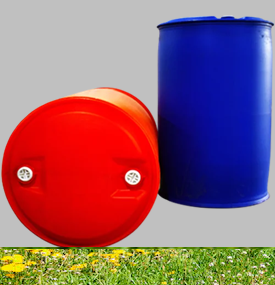
55-gal drum |
\$2.50 – \$4.00 per gallon |
| 190/200 Proof USP/NF |
55-gal drum |
\$15 – \$45 per gallon |
| Absolute Ethanol ≥99.5% |
1 gal – 5 gal |
\$30 – \$80 per gallon |
| Food-Grade / FCC Ethanol |
55-gal drum |
\$20 – \$60 per gallon |
| Reagent / ACS Grade |
1 L – 4 L bottle |
\$40 – \$120 per liter |
| HPLC Grade |
1 L – 4 L bottle |
\$50 – \$150 per liter |
Important pricing note: Unlike denatured alcohol (which is exempt from beverage taxes), undenatured ethanol is classified as potable alcohol and carries substantial federal, state, and import excise duties. This taxation frequently exceeds the base cost of the chemical itself, which is why non-denatured ethanol consistently commands a significant premium. Buyers outside the United States should additionally account for import tariffs—for instance, undenatured ethanol shipped into certain regions has faced duties of 6.4 EUR per hectoliter, versus 3.4 EUR per hectoliter for denatured material.
For current, volume-specific quotations tailored to your location and grade requirements, contact the team at [chemicalssuppliers.com](https://www.chemicalssuppliers.com/) directly.
Regulatory and Safety Considerations
Because undenatured ethanol is potable and flammable, it is governed by multiple overlapping regulatory frameworks:
-
Tax and licensing: In most countries, undistilled/undenatured potable alcohol requires a permit, bond, or license to purchase, handle, and store. The [U.S. Alcohol and Tobacco Tax and Trade Bureau (TTB)](https://www.ttb.gov/) regulates potable ethanol in the United States.
-
Occupational safety: Ethanol is a Category 2 flammable liquid (flash point 14 °C). It must be stored away from ignition sources in approved containers, with proper ventilation. Refer to OSHA and the [National Fire Protection Association (NFPA)](https://www.nfpa.org/) for storage guidance.
-
Chemical inventory compliance: Ethanol’s CAS 64-17-5 is listed on major inventories, including the [European Chemicals Agency (ECHA)](https://echa.europa.eu/) REACH registry and the [U.S. Environmental Protection Agency (EPA)](https://www.epa.gov/) TSCA inventory.
-
Safety documentation: Always obtain a current Safety Data Sheet (SDS) and Certificate of Analysis (CoA) from your supplier before use.
Reputable suppliers such as [chemicalssuppliers.com](https://www.chemicalssuppliers.com/) provide the required documentation and can advise on regulatory compliance for your specific jurisdiction.
Undenatured Ethanol and Related Chemical Products
The term “undenatured ethanol” encompasses a family of related products, grades, synonyms, and derivatives. Below is an extensive list of approximately 50 examples to help buyers identify the exact material they need. All of these can be sourced through [chemicalssuppliers.com](https://www.chemicalssuppliers.com/).
Core Undenatured Ethanol Products
-
Undenatured Ethanol 96% (Rectified Spirit)
-
Undenatured Ethanol 95% (190 Proof)
-
Undenatured Ethanol 99% (Near-Absolute)
-
Absolute Ethanol ≥99.5% (Anhydrous)
-
Absolute Ethanol ≥99.9% (Analytical)
-
Food-Grade Ethanol (FCC)
-
USP/NF Grade Ethanol
-
EP (European Pharmacopoeia) Grade Ethanol
-
BP (British Pharmacopoeia) Grade Ethanol
-
ACS Reagent Grade Ethanol
-
HPLC Grade Ethanol
-
200 Proof Pure Ethyl Alcohol
-
Non-Denatured 190 Proof Ethanol
-
Grain Alcohol (Neutral Grain Spirit)
-
Sugarcane-Derived Undenatured Ethanol
-
Corn-Derived (Maize) Ethanol
-
Wheat-Derived Ethanol
-
Molasses-Based Rectified Spirit
-
Synthetic (Petrochemical-Derived) Ethanol
-
Bioethanol (Fermentation-Grade, Potable)
Ethanol Solutions and Dilutions
-
70% Ethanol Solution (Disinfectant Grade)
-
75% Ethanol Solution (Antiseptic)
-
80% Ethanol Solution
-
90% Ethanol Solution
-
50% Ethanol Solution (Laboratory)
-
Ethanol-Water Azeotrope (95.6%)
-
Anhydrous Ethanol (Water-Free)
Denatured and Industrial Counterparts (Related, Commercially Available)
-
Denatured Alcohol (Methylated Spirit)
-
SD Alcohol 3A / 23A / 40B (Specially Denatured)
-
Completely Denatured Alcohol (CDA)
-
Industrial Ethanol 99% (Denatured)
-
Isopropyl Alcohol (IPA) 99% (comparative solvent)
-
Isopropyl Alcohol (IPA) 70%
Derivatives and Related Ethanol-Based Chemicals
-
Ethyl Acetate (Ethanol derivative)
-
Diethyl Ether (Ethanol-derived solvent)
-
Acetaldehyde
-
Acetic Acid (via ethanol oxidation)
-
Ethyl Lactate (green solvent)
-
Alcojet / Ethanol Cleaning Solutions
-
Ethanolamine (MEA/DEA)
-
Chloroform (ethanol-derived reagent)
Handling, Blending, and Specialty Products
-
Denatured vs. Undenatured Ethanol Blends (custom)
-
Ethanol for Hand Sanitizer (USP 96%)
-
Ethanol for Cannabis/Hemp Extraction
-
Ethanol for Botanical Extraction (Tinctures)
-
Ethanol for Perfume and Fragrance
-
Ethanol for Pharmaceutical Syrups
-
Ethanol for Food Flavoring Carriers
-
Ethanol for Cosmetic Formulation Base
-
Custom-Blended Ethanol Solutions (any specified %)
This comprehensive range ensures that whether you need a single drum of USP-grade ethanol for a laboratory or a full tanker of rectified spirit for pharmaceutical production, [chemicalssuppliers.com](https://www.chemicalssuppliers.com/) can meet your requirement with proper documentation and competitive pricing.
Where to Buy Undenatured Ethanol
Finding a trustworthy source for high-purity, compliant undenatured ethanol is the most important purchasing decision you will make. Here is how to source it confidently:
Buy Directly from Chemical Suppliers
The most reliable approach is to purchase from an established chemical distributor. Visit [chemicalssuppliers.com](https://www.chemicalssuppliers.com/) to:
-
Browse the complete catalog of undenatured ethanol grades and concentrations.
-
Request a bulk quotation for drums, totes, or tanker quantities.
-
Access Certificates of Analysis (CoA) and Safety Data Sheets (SDS).
-
Confirm regulatory documentation for your region.
-
Compare pricing across grades and package sizes.
A dedicated supplier provides consistent quality, traceable batches, and compliance support—advantages that generic marketplaces cannot match.
What to Look For in a Supplier
-
Documentation: CoA, SDS, and, where applicable, pharmacopeia compliance certificates.
-
Traceability: Batch numbers and origin (corn-based, sugarcane-based, etc.).
-
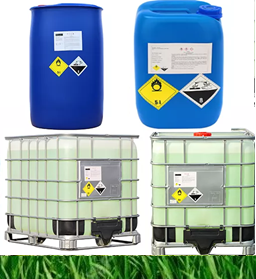
Packaging options: Liter bottles, gallons, 5-gallon pails, 55-gallon drums, 275-gallon totes, and bulk tankers.
-
Regulatory knowledge: Guidance on excise tax, permitting, and import/export.
-
Delivery and logistics: Safe, compliant transport of flammable liquids (DOT/ADR).
External Resources for Verification
For regulatory and market reference, buyers may consult authoritative external sources such as the [U.S. Energy Information Administration (EIA)](https://www.eia.gov/), the [Alternative Fuels Data Center (AFDC)](https://afdc.energy.gov/), and [Trading Economics](https://tradingeconomics.com/commodity/ethanol) for live commodity pricing. For chemical safety information, refer to [ChemicalSafetyFacts.org](https://www.chemicalsafetyfacts.org/chemicals/ethanol/).
Once you have verified your requirements, complete your purchase at [chemicalssuppliers.com](https://www.chemicalssuppliers.com/) for competitive pricing, full documentation, and dependable delivery.
Conclusion
Undenatured ethanol—whether you call it pure ethyl alcohol, non-denatured ethanol, grain alcohol, food-grade ethanol, or absolute ethanol—is an indispensable, high-value chemical that underpins pharmaceutical manufacturing, food and beverage production, cosmetics, laboratories, and renewable fuels. Its defining characteristic is purity: no denaturants, no toxins, no additives—just clean, versatile ethanol suitable for the most demanding applications.
Choosing the right grade and a compliant, knowledgeable supplier is essential. With prices fluctuating near \$2 per gallon at the commodity level and USP/food grades commanding substantially higher premiums, working with a transparent distributor pays dividends in both cost and confidence.
For all your undenatured ethanol needs—96% rectified spirit, absolute ethanol, USP/NF, food-grade, or any of the ~50 related products listed above—visit [chemicalssuppliers.com](https://www.chemicalssuppliers.com/) today to request a quotation and secure high-quality material with complete documentation.
Multi-Language Keyword Index (for Global Search Visibility)
This section lists key terms and synonyms in multiple languages to enhance indexing and reach across international markets.
English: Undenatured ethanol, non-denatured ethanol, pure ethyl alcohol, grain alcohol, absolute ethanol, food-grade ethanol, USP ethanol, potable alcohol, rectified spirit, anhydrous ethanol.
Mandarin Chinese (中文): 非变性乙醇, 无水乙醇, 食用乙醇, 纯酒精, 乙醇, 精馏酒精.
Hindi (हिन्दी): अनविकृत इथेनॉल, शुद्ध एथिल अल्कोहल, खाद्य-ग्रेड इथेनॉल, निर्जल इथेनॉल, एथनॉल.
Spanish (Español): Etanol no desnaturalizado, alcohol etílico puro, etanol de grado alimenticio, etanol absoluto, alcohol de grano.
Arabic (العربية): إيثانول غير مشوه, كحول إيثيلي نقي, إيثانول غذائي الدرجة, إيثانول مطلق, كحول الحبوب.
French (Français): Éthanol non dénaturé, alcool éthylique pur, éthanol de qualité alimentaire, éthanol absolu, alcool de grain.
Korean (한국어): 무변성 에탄올, 순수 에틸알코올, 식품등급 에탄올, 무수 에탄올, 곡물 알코올.
Yue Chinese / Cantonese (粵語): 非變性乙醇, 純乙醇, 食用乙醇, 無水乙醇, 穀物酒精.
Portuguese (Português): Etanol não desnaturado, álcool etílico puro, etanol de grau alimentício, etanol absoluto, álcool de cereais.
Indonesian (Bahasa Indonesia): Etanol tak terdenaturasi, etil alkohol murni, etanol food grade, etanol absolut, alkohol biji-bijian.
Russian (Русский): Не денатурированный этанол, чистый этиловый спирт, пищевой этанол, абсолютный этанол, зерновой спирт.
German (Deutsch): Nicht denaturiertes Ethanol, reiner Ethylalkohol, Ethanol in Lebensmittelqualität, absolutes Ethanol, Getreidealkohol.
Japanese (日本語): 非変性エタノール, 純エチルアルコール, 食品グレードエタノール, 無水エタノール, グレーンアルコール.
Vietnamese (Tiếng Việt): Ethanol không biến tính, cồn etylic tinh khiết, ethanol thực phẩm, ethanol tuyệt đối, cồn ngũ cốc.
Wu Chinese / Shanghainese (吴语): 非变性乙醇, 纯乙醇, 食用乙醇, 无水乙醇, 粮食酒精.
Turkish (Türkçe): Denatüre edilmemiş etanol, saf etil alkol, gıda sınıfı etanol, mutlak etanol, tahıl alkolü.