Côte d’Ivoire stands at a pivotal crossroads in West Africa’s industrial evolution. As the economic powerhouse of the UEMOA (Union Économique et Monétaire Ouest-Africaine) region, the nation has experienced remarkable GDP growth and infrastructure development over the past decade. This growth has been accompanied by an insatiable appetite for organic chemicals — the invisible building blocks that drive agriculture, manufacturing, pharmaceuticals, cosmetics, food processing, water treatment, and construction. For procurement managers, factory owners, agribusiness directors, and import-export traders operating in and around Abidjan, San-Pédro, Bouaké, and Yamoussoukro, understanding where to source high-quality organic chemicals at competitive per-metric-ton prices has become nothing short of a strategic imperative.
The global organic chemicals market was valued at approximately \$1,142.6 billion in 2025 and is projected to reach \$1,798.4 billion by 2034, growing at a compound annual growth rate (CAGR) of 5.2% . This staggering figure underscores just how central organic chemistry has become to modern economic life. In the West African context specifically, Côte d’Ivoire has emerged as a chemical trade hub with an increasingly attractive chemical industry landscape, making it one of the most promising locations for large-volume chemical sales and distribution across Francophone Africa . The country’s strategic ports, relatively stable political climate, and growing manufacturing base create an ideal environment for bulk chemical importation and redistribution.
Yet for all this opportunity, the procurement landscape remains fragmented. Buyers face a maze of questions: What are the current fair-market prices per metric ton? Which suppliers offer genuine quality certifications? How do shipping costs from Asia, Europe, or the Middle East affect landed pricing at the Port of Abidjan? Can one supplier reliably deliver all fifty-plus chemical inputs an operation needs? This comprehensive guide answers these questions with depth and precision — providing actionable pricing data, supplier intelligence, and procurement strategies you can implement immediately.
Côte d’Ivoire’s coastline along the Gulf of Guinea positions it as the natural entry point for bulk chemical shipments destined for landlocked neighbors including Burkina Faso, Mali, and Niger. The Port of Abidjan — one of the busiest and deepest ports in sub-Saharan Africa — handles millions of tons of cargo annually and features specialized berths suitable for liquid chemical tankers and containerized chemical shipments. This logistical advantage translates into lower freight costs, faster customs clearance, and more predictable delivery timelines compared to alternative regional ports.
The road and rail corridors radiating from Abidjan toward the interior create an efficient distribution network. The Autoroute du Nord connects Abidjan to Yamoussoukro and Bouaké, while the Abidjan–Ouagadougou railway corridor facilitates bulk chemical movement toward Burkina Faso. For importers, this means that organic chemicals arriving at Abidjan can reach end-users across the entire Sahelian belt within days, not weeks.
Côte d’Ivoire’s chemical consumption profile is unusually diversified for an emerging market. Several sectors drive demand simultaneously:
Agriculture and Agrochemicals: As the world’s leading cocoa producer and a major exporter of cashew nuts, coffee, rubber, palm oil, and cotton, Côte d’Ivoire consumes enormous quantities of fertilizers, pesticides, herbicides, and soil treatment chemicals. The government’s ambitious agricultural transformation agenda — aiming to increase the agri-processing rate and replace imports with local value addition — further intensifies chemical demand . Agricultural chemical imports, including organic intermediates used in pesticide formulation and fertilizer binding, represent a substantial and growing segment.
Manufacturing and Industrial Processing: From textile mills in Bouaké to plastics fabrication facilities around Abidjan’s industrial zones, Ivorian manufacturers require solvents, plasticizers, monomers, catalysts, and process chemicals in bulk. The government’s push toward import substitution industrialization means local factories are scaling up — and so are their chemical procurement volumes.
Water Treatment and Sanitation: Rapid urbanization places immense strain on municipal water systems. Coagulants, flocculants, disinfectants, and pH-adjusting organic chemicals are needed in ever-larger quantities by SODECI (the national water utility) and industrial water treatment facilities.
Pharmaceuticals and Personal Care: Côte d’Ivoire’s growing pharmaceutical formulation sector and its vibrant cosmetics and personal care manufacturing industry — including shea butter processing and soap production — consume organic excipients, active pharmaceutical ingredients (APIs), surfactants, emollients, and preservatives.
Construction and Infrastructure: With the government investing heavily in roads, bridges, housing, and public buildings, the construction chemicals segment — including concrete admixtures, waterproofing compounds, paints, coatings, and adhesives — is booming.
Before diving into specific chemical listings and prices, it is essential to understand how the per-metric-ton pricing model works in international chemical trade — and why it matters for Ivorian buyers.
A metric ton (MT), also called a tonne, equals 1,000 kilograms or approximately 2,204.62 pounds. When a supplier quotes a price of “\$680/MT FOB,” they mean that one thousand kilograms of that chemical costs \$680, loaded onto a vessel at the port of origin, with all export customs formalities completed. This is distinct from CIF (Cost, Insurance, Freight) pricing, where the seller covers freight and insurance to the destination port — in your case, Abidjan.
For Ivorian buyers, understanding the difference between FOB, CIF, and DAP (Delivered at Place) pricing is critical:
FOB (Free on Board): The price covers the goods plus delivery to the origin port and loading. The buyer pays freight, insurance, and destination charges separately. FOB pricing typically appears lower but requires the buyer to manage logistics.
CIF (Cost, Insurance, Freight): The seller arranges and pays for freight and minimum insurance to the destination port. This is often the most convenient option for Ivorian importers who prefer a single all-in price.
DAP (Delivered at Place): The seller delivers to a named destination — e.g., your warehouse in Abidjan’s Zone Industrielle de Yopougon. All transport costs and risks are the seller’s responsibility until delivery.
The basic organic chemicals Producer Price Index in the United States rose approximately 18% year-on-year through May 2026, and the BLS PPI for basic organic chemicals surged roughly 21% over a three-month window . These price movements ripple through global supply chains and ultimately affect what Ivorian buyers pay.
Key factors currently shaping organic chemical pricing include:
Feedstock Volatility: Most organic chemicals derive from petroleum, natural gas, or biomass feedstocks. Crude oil price fluctuations directly impact methanol, ethylene, propylene, benzene, toluene, xylene, and their downstream derivatives. When Brent crude moves, organic chemical prices follow — typically with a lag of four to eight weeks.
Energy Costs in Production Regions: Chemical manufacturing is energy-intensive. European producers faced elevated natural gas prices through 2025–2026, pushing European-origin chemicals to higher price points. Chinese producers, benefiting from relatively stable coal-based energy, maintained more competitive pricing — explaining why a growing share of organic chemicals reaching West Africa originates from Chinese factories.
Freight and Shipping Dynamics: Container freight rates from Shanghai to West Africa, bulk chemical tanker availability, and port congestion all affect the landed cost of chemicals in Abidjan. When global shipping markets tighten, the freight component can represent 15–30% of the total landed cost.
Regional Demand-Supply Balances: The African mining chemicals market was valued at approximately \$622.87 million in 2020 and has been expanding at a CAGR of 5.6% . Growing demand from African industries competing for limited supply allocations creates upward price pressure on chemicals popular across multiple sectors.
Currency Exchange Rates: The West African CFA franc (XOF) is pegged to the euro. When the euro strengthens against the US dollar, chemicals priced in dollars (as most internationally traded chemicals are) become more expensive in CFA franc terms. Conversely, euro weakness improves Ivorian purchasing power for dollar-denominated chemical imports.
The following price table represents the most current market intelligence available as of July 2026. Prices reflect average CIF Abidjan ranges for industrial-grade material, unless otherwise noted. Actual prices may vary based on order volume, packaging, supplier origin, and negotiation. All prices are in US dollars per metric ton (USD/MT).
1. Methanol (Methyl Alcohol) — \$440–\$590/MT
The simplest alcohol and a foundational organic chemical. Used as a solvent, antifreeze, and feedstock for formaldehyde, acetic acid, and MTBE production. Chinese domestic methanol prices hovered around 2,790 Yuan/MT (approximately \$385/MT) in July 2026, with CFR Japan pricing around \$440/MT . After adding freight and insurance to Abidjan, landed prices typically range \$480–\$590/MT. Major suppliers include Methanex, SABIC, and numerous Chinese producers.
2. Ethanol (Ethyl Alcohol) — \$720–\$950/MT
Industrial-grade and food-grade ethanol find extensive use in Côte d’Ivoire’s pharmaceutical, cosmetic, and beverage industries. Prices vary significantly by grade, purity (95% vs. 99.9% anhydrous), and origin. Brazilian sugarcane ethanol and US corn ethanol compete with Asian synthetic ethanol. Food-grade anhydrous ethanol commands a \$150–\$200/MT premium over industrial solvent grade.
3. Isopropyl Alcohol (IPA / Isopropanol) — \$1,050–\$1,400/MT
A versatile solvent critical for electronics cleaning, pharmaceutical manufacturing, disinfectant production, and printing inks. The disinfectant demand surge that characterized 2020–2022 has normalized, but healthcare and industrial demand remains robust. 99.9% purity pharmaceutical-grade IPA trades at the upper end of the range.
4. Acetone — \$1,100–\$1,350/MT
Primarily produced as a co-product of phenol manufacturing via the cumene process. Widely used as a solvent for paints, coatings, adhesives, and as a chemical intermediate. In May 2026, Chinese acetone prices averaged approximately \$1,108/MT, while US prices averaged \$1,227/MT . Ivorian buyers can expect landed prices of \$1,200–\$1,350/MT from Asian sources.
5. Ethyl Acetate — \$950–\$1,250/MT
A widely used ester solvent favored for its pleasant odor and low toxicity profile. Key applications include paints, coatings, printing inks, adhesives, and as an extraction solvent in food processing. Chinese FOB prices typically range \$850–\$950/MT, with freight to Abidjan adding approximately \$100–\$300/MT.
6. Butyl Acetate (n-Butyl Acetate) — \$1,100–\$1,450/MT
Preferred in automotive paints and high-performance coatings due to its excellent solvency and evaporation rate. Available as n-butyl acetate (normal) and isobutyl acetate. n-Butyl acetate commands a modest premium due to superior performance characteristics.
7. Toluene — \$1,000–\$1,200/MT
An aromatic hydrocarbon solvent and critical feedstock for benzene and xylene production. Also used directly in paints, coatings, adhesives, and as an octane booster in gasoline blending. May 2026 prices averaged approximately \$1,004/MT in China and \$1,071/MT in India . The global toluene market is projected to grow from approximately \$31.96 billion in 2026 toward \$50.32 billion by 2033, reflecting strong and sustained demand .
8. Xylene (Mixed Xylenes) — \$950–\$1,250/MT
Available as mixed xylenes, ortho-xylene, meta-xylene, and para-xylene, each with distinct applications. Mixed xylenes serve as solvents in paints, coatings, and agricultural chemical formulations. Para-xylene is the key feedstock for purified terephthalic acid (PTA) and ultimately PET resin. Solvent-grade mixed xylene trades at lower price points than isomer-grade material.
9. Benzene — \$850–\$1,100/MT
The foundational aromatic hydrocarbon and building block for an enormous range of downstream chemicals including styrene, phenol, cyclohexane, aniline, and cumene. North American benzene prices stood at approximately \$860/MT (US\$0.86/KG) in July 2026, with Northeast Asia around \$1,010/MT . The benzene-toluene-xylene (BTX) market is projected to reach 155.83 million tons in 2026 .
10. Methyl Ethyl Ketone (MEK / Butanone) — \$1,300–\$1,650/MT
A high-performance ketone solvent with exceptional solvency for resins, polymers, and coatings. Extensively used in polyurethane processing, automotive paint formulation, and as a dewaxing agent in petroleum refining. Limited global production capacity keeps MEK pricing at a premium relative to acetone.
11. Dimethylformamide (DMF) — \$1,100–\$1,500/MT
A polar aprotic solvent with exceptional ability to dissolve both polar and non-polar compounds. Critical in polyurethane synthetic leather production, acrylic fiber spinning, and pharmaceutical peptide synthesis. Chinese producers dominate DMF supply to African markets.
12. Dichloromethane (Methylene Chloride) — \$700–\$950/MT
A volatile chlorinated solvent widely used in paint stripping, pharmaceutical processing, polycarbonate production, and as an extraction solvent in food and beverage processing (e.g., decaffeination). Environmental and occupational health regulations are gradually tightening globally, which may affect long-term availability.
13. Tetrahydrofuran (THF) — \$2,200–\$2,800/MT
A specialty cyclic ether solvent indispensable in PVC cement formulation, pharmaceutical manufacturing, and as a reaction medium for Grignard and organometallic reactions. Higher pricing reflects specialized production technology and strong demand from the pharmaceutical sector.
14. Acetic Acid (Glacial Acetic Acid) — \$550–\$750/MT
Perhaps the most important organic acid by production volume. Used in vinyl acetate monomer (VAM) production, purified terephthalic acid (PTA) manufacturing, acetic anhydride, acetate esters, and as a food-grade acidulant (vinegar). Northeast Asia acetic acid prices stood at approximately \$460/MT (US\$0.46/KG) in June 2026 — down 19.3% — while European prices averaged around \$640/MT . US prices in late 2025 were around \$548/MT .
15. Formic Acid (85% and 99%) — \$650–\$950/MT
A potent organic acid used in leather tanning, textile dyeing, animal feed preservation (silage additive), and as a descaling agent in industrial cleaning. 85% concentration is most common for African markets; 99% grade commands a \$150–\$250/MT premium. Chinese producers are the dominant suppliers to West Africa.
16. Oxalic Acid — \$680–\$880/MT
A dicarboxylic acid widely used in textile bleaching, wood pulp bleaching, metal cleaning and polishing (rust removal), and as a precipitating agent in rare earth element processing. Available as dihydrate and anhydrous forms. Chinese manufacturing dominates global supply.
17. Citric Acid (Anhydrous and Monohydrate) — \$780–\$1,100/MT
Produced via fermentation of carbohydrate substrates using Aspergillus niger. Essential in food and beverage manufacturing (acidulant, preservative, flavor enhancer), pharmaceutical effervescent formulations, cosmetic pH adjustment, and industrial cleaning/descaling. Bulk FCL pricing for food-grade citric acid has been observed in the range of \$145/MT (FOB origin), though landed CIF prices to West Africa are significantly higher after freight, insurance, and margin .
18. Stearic Acid (Triple-Pressed / Rubber Grade) — \$950–\$1,350/MT
A long-chain fatty acid derived from palm oil, tallow, or other fats and oils. Rubber-grade stearic acid is a critical processing aid in tire and rubber goods manufacturing. Triple-pressed (cosmetic/pharmaceutical grade) commands a premium. Given Côte d’Ivoire’s position as a major palm oil producer, there is potential for domestic or regional stearic acid manufacturing development.
19. Acrylic Acid — \$1,200–\$1,650/MT
A key monomer for superabsorbent polymers (SAPs), acrylic esters, and various polymer dispersions. Used in diaper manufacturing, water treatment polymers, paints, coatings, adhesives, and construction chemicals. The African market imports primarily from Asian and Middle Eastern producers.
20. Phosphoric Acid (Food Grade 85%) — \$950–\$1,300/MT
While not strictly organic, phosphoric acid is frequently co-procured with organic acids by food and beverage manufacturers. Essential for cola beverage production, sugar refining, and as a nutrient source in fertilizer manufacturing. Moroccan phosphate reserves make North African producers significant suppliers to West African markets.
21. Glycerin (Glycerol) — Refined 99.7% USP Grade — \$650–\$950/MT
A triol compound available as a byproduct of biodiesel production (crude glycerin) and through synthetic routes. Refined USP-grade glycerin is essential in pharmaceutical syrups, toothpaste, cosmetics, personal care products, and as a humectant in food products. The global glycerin market has experienced price volatility due to biodiesel policy shifts in Europe and the Americas.
22. Propylene Glycol (PG) — USP/Industrial Grade — \$1,250–\$1,700/MT
Available as monopropylene glycol (MPG) and dipropylene glycol (DPG). USP-grade PG is critical in pharmaceutical formulations, food processing (as a humectant and solvent), cosmetics, and as a non-toxic antifreeze. Industrial-grade PG is used in unsaturated polyester resin manufacturing, functional fluids, and deicing solutions .
23. Ethylene Glycol (MEG) — \$600–\$850/MT
Massive-volume petrochemical primarily used in polyester fiber and PET resin production. Côte d’Ivoire’s textile manufacturing sector consumes MEG indirectly through polyester yarn imports, while the growing packaging sector drives PET demand. MEG prices closely track ethylene and ultimately crude oil prices.
24. Sorbitol 70% Solution — \$580–\$780/MT
A sugar alcohol produced by hydrogenation of glucose. Widely used in toothpaste (as a humectant and sweetener), confectionery (sugar-free products), pharmaceutical syrups, and cosmetic formulations as a humectant and texturizer. Non-cariogenic properties make it valuable in oral care applications .
25. Pentaerythritol — \$1,450–\$1,900/MT
A tetrafunctional polyol used primarily in alkyd resin manufacturing for paints and coatings, as well as in synthetic lubricant esters, rosin esters for adhesives, and intumescent flame retardant systems. Limited global production capacity supports premium pricing.
26. Neopentyl Glycol (NPG) — \$1,600–\$2,100/MT
A specialty diol used in high-performance polyester resins for powder coatings, automotive coatings, and architectural coatings. NPG-based polyesters offer superior hydrolytic stability and weatherability compared to conventional glycol-based alternatives.
27. 2-Ethylhexanol (2-EH) — \$1,300–\$1,700/MT
An oxo-alcohol primarily used in plasticizer production (DOP, DOTP), 2-ethylhexyl acrylate for adhesives and coatings, and as a solvent and extraction agent. Demand closely tracks the PVC and construction chemicals sectors.
28. Formaldehyde (37% Formalin Solution) — \$380–\$520/MT
One of the highest-volume organic chemicals globally. Used primarily in amino resin production (urea-formaldehyde, melamine-formaldehyde, phenol-formaldehyde) for wood adhesives and particle board. Côte d’Ivoire’s growing furniture and construction sectors consume significant quantities. Methanol feedstock costs strongly influence formaldehyde pricing.
29. Paraformaldehyde (92–96% purity) — \$800–\$1,050/MT
Solid, high-concentration formaldehyde equivalent preferred when shipping liquid formalin is uneconomical. Used in resin production, agricultural chemical synthesis, and as a disinfectant and sterilant. Depolymerizes to formaldehyde in solution.
30. Glutaraldehyde (50% Solution) — \$1,900–\$2,600/MT
A powerful dialdehyde biocide used extensively in oilfield water treatment, cooling water systems, leather tanning, and as a sterilant in healthcare settings. Premium pricing reflects specialized production and high biocidal efficacy.
31. Furfural — \$1,300–\$1,800/MT
A bio-based aldehyde derived from agricultural residues (corncobs, sugarcane bagasse, oat hulls). Used in furfuryl alcohol production (foundry resins), as a selective solvent in petroleum refining and rosin extraction, and increasingly as a platform chemical for bio-based products. Given West Africa’s agricultural residue availability, furfural represents a potential future domestic production opportunity.
32. Benzaldehyde — \$2,200–\$2,800/MT
An aromatic aldehyde with a characteristic almond odor. Essential in flavor and fragrance manufacturing, pharmaceutical synthesis, and as a chemical intermediate in dye and agrochemical production. Available as natural (extracted from bitter almond oil) and synthetic grades.
33. Dioctyl Phthalate (DOP) — \$1,250–\$1,650/MT
The most widely used general-purpose PVC plasticizer. Essential for flexible PVC products including cables, flooring, films, synthetic leather, and hoses. Regulatory pressure in Europe and North America is driving gradual substitution, but DOP remains dominant in African flexible PVC markets due to its excellent cost-performance balance.
34. Dibutyl Phthalate (DBP) — \$1,350–\$1,750/MT
A fast-fusing plasticizer widely used in PVC processing, nitrocellulose lacquers, and as a solvent in fragrance formulations. Chinese domestic DBP prices hovered around 13,960 Yuan/MT in recent trading .
35. Dioctyl Terephthalate (DOTP) — \$1,450–\$1,900/MT
A non-phthalate plasticizer gaining market share as a DOP replacement in sensitive applications including children’s toys, food contact materials, and medical devices. Higher pricing reflects premium positioning and growing demand.
36. Methyl Acetate — \$950–\$1,250/MT
A fast-evaporating ester solvent used in quick-drying paints, coatings, adhesives, and nail polish removers. Also used as a chemical intermediate. Biodegradable profile and non-HAP (Hazardous Air Pollutant) status support growing adoption .
37. Triacetin (Glyceryl Triacetate) — \$1,800–\$2,400/MT
A triester of glycerol and acetic acid used as a plasticizer for cellulose acetate (cigarette filters), a humectant, a food additive (E1518), and in pharmaceutical capsule formulations. Niche applications support premium pricing.
38. Monoethanolamine (MEA) — \$1,200–\$1,600/MT
A primary amine and alcohol used in gas treating (CO₂ and H₂S removal from natural gas and refinery streams), detergent and surfactant production, cement grinding aids, and as a chemical intermediate. West African oil and gas operations drive significant regional demand.
39. Triethanolamine (TEA 85%/99%) — \$1,200–\$1,700/MT
A tertiary amine widely used in personal care products (as an emulsifier and pH adjuster), cement grinding aids, metalworking fluids, and as a corrosion inhibitor in industrial water systems. 99% grade commands a \$150–\$250/MT premium over 85% grade.
40. Diethylenetriamine (DETA) — \$2,500–\$3,300/MT
A polyfunctional amine used in lube oil additives, polyamide curing agents, chelating agents, and as a chemical intermediate for paper wet-strength resins. Specialized production and limited manufacturing locations support premium pricing.
41. Hexamine (Hexamethylenetetramine) — \$900–\$1,250/MT
Produced by reacting formaldehyde with ammonia. Used as a curing agent for phenolic resins (foundry applications), in explosive formulations, as a preservative, and as a pharmaceutical intermediate (methenamine). Chinese producers are the dominant global suppliers.
42. Acetonitrile — \$2,800–\$4,500/MT
A high-purity polar aprotic solvent produced as a byproduct of acrylonitrile manufacturing. Essential in HPLC analytical applications, pharmaceutical peptide synthesis, and as a reaction solvent. Prices are highly volatile due to the dependence on acrylonitrile production rates — when acrylonitrile plants reduce output, acetonitrile scarcity drives prices sharply upward.
43. Phenol — \$1,100–\$1,500/MT
A key aromatic chemical used primarily in bisphenol-A (BPA) production for polycarbonate and epoxy resins, phenolic resin manufacturing for wood adhesives and molding compounds, and as a chemical intermediate. Produced via the cumene process with acetone as a co-product, linking phenol and acetone pricing.
44. Nonylphenol — \$1,500–\$2,000/MT
An alkylphenol used in nonylphenol ethoxylate (NPE) surfactant production, epoxy resin curing, and as an antioxidant and stabilizer in plastics. Regulatory restrictions on NPE surfactants in Europe and North America due to endocrine disruption concerns are gradually reducing demand in developed markets, but African demand remains steady.
45. Bisphenol-A (BPA) — \$1,400–\$1,900/MT
The monomer at the heart of polycarbonate and epoxy resin production. Polycarbonate applications include automotive components, construction glazing, electronic device housings, and reusable water bottles. Epoxy resin applications include protective coatings, adhesives, composites, and electronic encapsulation.
46. Melamine — \$1,000–\$1,400/MT
A nitrogen-rich heterocyclic compound used in melamine-formaldehyde resin production (laminates, countertops, dinnerware, adhesives), flame retardant formulations, and concrete plasticizers. Chinese producers dominate global supply, with pricing influenced by urea feedstock costs and environmental enforcement on production facilities.
47. Sodium Acetate (Anhydrous / Trihydrate) — \$650–\$850/MT
Used in textile dyeing (as a buffering agent), pharmaceutical manufacturing, food preservation, concrete admixtures (as a set accelerator), and heating pads. Trihydrate and anhydrous grades serve different applications; anhydrous commands a premium.
48. Potassium Sorbate — \$3,200–\$4,200/MT
A widely used food preservative (E202) effective against molds, yeasts, and some bacteria. Required in cheese, baked goods, wine, dried meats, and numerous processed food products. Premium pricing reflects food-grade quality requirements and specialized manufacturing.
49. Sodium Benzoate — \$1,100–\$1,450/MT
An aromatic carboxylic acid salt used as a food preservative (E211), corrosion inhibitor, and pharmaceutical intermediate. Effective in acidic conditions (below pH 4.5), making it ideal for carbonated beverages, fruit juices, pickles, and condiments. Toluene feedstock costs influence sodium benzoate pricing.
50. EDTA (Ethylenediaminetetraacetic Acid) and Its Salts — \$1,800–\$2,500/MT
A powerful chelating agent available as the free acid, disodium salt (EDTA-2Na), and tetrasodium salt (EDTA-4Na). Essential in cleaning products (soap scum and scale removal), water treatment (metal ion sequestration), textile processing, pulp and paper manufacturing, and pharmaceutical formulations. The tetrasodium salt is most commonly traded in industrial markets.
For Ivorian chemical buyers — whether you are a large industrial consumer, a distributor serving West African markets, or an importer building a product portfolio — [chemicalssuppliers.com](https://www.chemicalssuppliers.com/) represents the most comprehensive, reliable, and cost-effective sourcing platform available.
The platform has been purpose-built to address the specific pain points West African chemical buyers face: fragmented supplier landscapes, opaque pricing, inconsistent quality, complex logistics, and language barriers. Here is what sets it apart:
Extensive Product Portfolio: With access to over 500 organic chemicals, inorganic chemicals, and specialty products, the platform can fulfill virtually any industrial chemical requirement from a single procurement interface. This eliminates the administrative burden of managing dozens of individual supplier relationships.
Verified Supplier Network: Every supplier listed on [chemicalssuppliers.com](https://www.chemicalssuppliers.com/) undergoes a rigorous verification process including factory audits, quality management system assessment, export documentation review, and trade history evaluation. This dramatically reduces the risk of receiving off-specification material — a nightmare scenario that can shut down production lines and destroy batch quality.
Transparent Per-Metric-Ton Pricing: Unlike traditional chemical trading where prices are negotiated in opaque bilateral discussions, the platform publishes indicative pricing that allows buyers to benchmark offers and negotiate from a position of knowledge. Price discovery — one of the greatest challenges in African chemical procurement — becomes straightforward.
Logistics and Documentation Support: The platform provides end-to-end logistics coordination including freight booking, customs documentation preparation, insurance arrangement, and door-to-door tracking. For buyers unfamiliar with international chemical shipping procedures, this support is invaluable. The platform handles the International Maritime Dangerous Goods (IMDG) declarations, Safety Data Sheet (SDS) preparation, and Certificate of Analysis (CoA) documentation that chemical shipments require.
Multi-Language Capability: With support for English, French, Mandarin Chinese, and other major languages, the platform eliminates communication barriers that have historically complicated trade between African buyers and Asian suppliers.
To explore the full catalog and request quotations, visit the marketplace directly at:
[https://www.chemicalssuppliers.com/]
For specific inquiries, the platform’s procurement specialists can be reached through the contact form at [chemicalssuppliers.com/contact](https://www.chemicalssuppliers.com/).
Navigating the import process correctly is essential to avoid costly delays, demurrage charges at the Port of Abidjan, and regulatory complications. The following step-by-step guide draws on established best practices for chemical importation into Côte d’Ivoire .
Before placing any order, confirm the following:
Supplier Documentation: Request the supplier’s Certificate of Incorporation, ISO certification (if applicable), product SDS, product CoA template, and three trade references from African buyers. Legitimate suppliers will provide these without hesitation.
Product Classification: Determine the correct Harmonized System (HS) code for each product. Organic chemicals generally fall within HS Chapters 29 (organic chemicals) and 38 (miscellaneous chemical products). Correct classification is essential for accurate duty calculation and regulatory compliance.
Regulatory Check: Verify with the Ivorian Ministry of Commerce and the Ministry of Environment whether any of the products you intend to import require special permits, licenses, or are subject to import restrictions. Some organic solvents and precursors may be regulated.
Structure your purchase using internationally recognized Incoterms 2020. For first-time buyers, CIF Abidjan is recommended because it places freight and insurance responsibility on the seller:
Specify the product name, CAS number, purity/concentration, and packaging type unambiguously.
Agree on quality parameters and the analytical method for verification.
Define payment terms clearly: Letter of Credit (L/C) at sight, Telegraphic Transfer (T/T) with deposit against proforma invoice, or Documents Against Payment (D/P).
Include a clause specifying that a third-party inspection (e.g., SGS, Bureau Veritas, Intertek) at the loading port is acceptable. SGS Ivory Coast offers comprehensive dry and packaged chemical testing services .
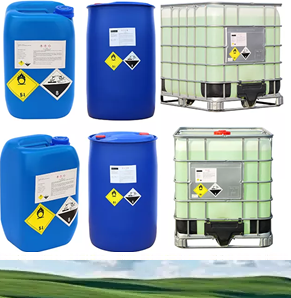
Container Selection: Most organic chemicals ship in 20-foot or 40-foot containers, either as ISO tank containers (for bulk liquids), IBC totes (1,000 liters each), or drums (200 liters each) on pallets. A 20-foot container typically accommodates 80 drums (16 metric tons net weight for most chemicals) or 20 IBC totes (20 metric tons).
Shipping Lines: Major carriers serving the Asia–West Africa route include Maersk, CMA CGM, COSCO, MSC, and Hapag-Lloyd. Transit time from Shanghai to Abidjan ranges from 35 to 50 days depending on routing and transshipment.
Marine Insurance: Always insure chemical cargo at 110% of the CIF value, covering All Risks including theft, pilferage, and non-delivery (Institute Cargo Clauses A).
Engage a licensed customs broker (commissionnaire en douane agréé) who has specific experience with chemical imports. The broker will:
File the declaration using the SYDAM-World electronic customs system.
Present the commercial invoice, packing list, bill of lading, certificate of origin, SDS, CoA, and any required permits.
Calculate and pay customs duties and VAT. Organic chemicals typically attract import duties ranging from 5% to 20% depending on HS code classification, plus 18% VAT.
Clearance typically takes 3–7 working days if all documentation is in order.
Organic chemicals require appropriate storage conditions:
Flammable solvents require ventilated, explosion-proof storage areas away from ignition sources.
Corrosive acids and alkalis require corrosion-resistant containment with spill management provisions.
Moisture-sensitive chemicals require dry, climate-controlled storage.
Food-grade products require segregation from industrial chemicals to prevent cross-contamination.
The outlook for organic chemical consumption in Côte d’Ivoire and the broader West African region is robust. Several structural trends support sustained growth:
Demographic Momentum: West Africa’s population — already exceeding 400 million — is growing at approximately 2.6% annually, creating expanding demand for food, housing, consumer goods, and infrastructure — all of which require chemical inputs.
Agricultural Transformation: Côte d’Ivoire’s National Development Plan (PND) prioritizes agricultural value addition. Processing raw cocoa beans into cocoa butter, cocoa powder, and chocolate products; processing raw cashew nuts into kernels; and manufacturing finished rubber products all require organic solvents, extraction agents, and processing chemicals.
Infrastructure Investment: The government’s infrastructure program — encompassing roads, bridges, housing, hospitals, and schools — drives demand for construction chemicals, paints, coatings, adhesives, sealants, and water treatment chemicals.
Regional Integration: As the African Continental Free Trade Area (AfCFTA) reduces tariff barriers, Côte d’Ivoire’s position as a chemical distribution hub for the entire West African region will strengthen, potentially increasing chemical imports for re-export to neighboring countries.
Industrialization Policy: The government’s import substitution industrialization strategy encourages domestic manufacturing, which in turn creates demand for the full spectrum of industrial organic chemicals — from basic solvents to sophisticated specialty intermediates.
Before concluding this guide, here is a practical ten-point checklist for chemical procurement professionals in Côte d’Ivoire:
Define specifications precisely: CAS number, purity, impurities profile, physical form, packaging — ambiguity causes disputes.
Request multiple quotations: Three to five competitive offers reveal the true market price range.
Verify supplier credentials: Factory audits, certifications, export history, and references minimize risk.
Negotiate on total landed cost, not FOB price: A low FOB price with high freight or poor documentation is no bargain.
Use Incoterms correctly: CIF Abidjan simplifies your logistics; DAP your warehouse provides maximum convenience.
Arrange pre-shipment inspection: Independent verification of quantity and quality protects your interests.
Understand customs requirements before ordering: Regulatory surprises at the port are expensive.
Plan for demurrage-free discharge: Arrange trucking and storage before the vessel arrives.
Build supplier relationships: Long-term partnerships yield priority allocation during shortages, better credit terms, and preferential pricing.
Visit [chemicalssuppliers.com](https://www.chemicalssuppliers.com/) regularly: Market conditions change; staying informed ensures you never overpay.
For additional market intelligence and regulatory information, consult these authoritative external sources:
[SGS Ivory Coast — Dry and Packaged Chemicals Testing Services](https://www.sgs.com/en-ci/services/dry-chemicals) — Independent inspection and testing for chemical shipments entering Côte d’Ivoire .
[Azelis Ivory Coast (Orkila) — Specialty Chemical Distribution](https://www.azelis.com/en/regions-and-locations/emea/ivory-coast) — Regional specialty chemicals and food ingredients distributor .
[International Trade Administration — Côte d’Ivoire Country Commercial Guide](https://www.trade.gov/country-commercial-guides/cote-divoire-agro-processing-agricultural-services-and-products) — US government resource on Ivorian agro-processing and agricultural services market .
[SNJ Exim — Chemical Supplier Côte d’Ivoire & Francophone West Africa](https://snjexim.com/markets/cote-divoire/) — Supplier specializing in caustic soda, hydrogen peroxide, and industrial acids for West African markets .
[ICIS — Caustic Soda Prices, Market News & Price Index](https://www.icis.com/explore/commodities/chemicals/caustic-soda/) — Independent commodity chemical pricing and market intelligence.
[Procurement Resource — Acetone Price Trend 2026](https://www.procurementresource.com/resource-center/acetone-price-trends) — Detailed acetone price charts, forecasts, and market analysis .
[IMARC Group — Caustic Soda Flakes Pricing Report](https://www.imarcgroup.com/caustic-soda-flakes-pricing-report) — Comprehensive caustic soda pricing data including Africa regional breakdowns .
The organic chemical market in Côte d’Ivoire is dynamic, growing, and full of opportunity — but success depends on having the right information and the right supply partners. Whether you need a single container of methanol for your distillery, twenty containers of citric acid for your beverage plant, or ongoing monthly shipments of a diversified chemical portfolio, the principles outlined in this guide will serve you well.
Visit [https://www.chemicalssuppliers.com/] today to browse the full product catalog, request quotations, and connect with verified global suppliers who understand the West African market. Your next reliable chemical shipment is just a few clicks away.
To maximize the discoverability of this resource across global search engines and in multiple linguistic communities, the following keywords, phrases, and translations are provided:
English: Organic chemicals supplier Côte d’Ivoire, wholesale organic chemicals, bulk chemical prices per metric ton, industrial chemicals West Africa, chemical import Abidjan, organic solvents price MT, buy chemicals online, chemical distributor Ivory Coast, industrial raw materials, chemical procurement Africa, petrochemical supplier West Africa, bulk solvents CIF Abidjan, chemical trading platform, organic intermediates, fine chemicals supplier.
French (Français): Fournisseur de produits chimiques organiques Côte d’Ivoire, prix des produits chimiques par tonne métrique, acheter produits chimiques en gros Abidjan, solvants organiques prix, importation de produits chimiques Afrique de l’Ouest, distributeur de produits chimiques industriels, acide acétique prix, méthanol fournisseur, plateforme d’approvisionnement chimique, produits chimiques en vrac Côte d’Ivoire.
Mandarin Chinese (普通话): 科特迪瓦有机化学品供应商, 有机化学品批发价格每公吨, 西非工业化学品, 阿比让化学品进口, 有机溶剂价格, 批量购买化学品, 象牙海岸化学分销商, 散装化学品价格, 中国化学品出口非洲.
Hindi (हिन्दी): कोटे डी आइवर में कार्बनिक रसायन आपूर्तिकर्ता, प्रति मीट्रिक टन रासायनिक मूल्य, थोक रसायन खरीद, पश्चिम अफ्रीका औद्योगिक रसायन, अबिदजान रासायनिक आयात, कार्बनिक विलायक मूल्य, रासायनिक वितरक, बल्क केमिकल सप्लायर.
Spanish (Español): Proveedor de productos químicos orgánicos Costa de Marfil, precio de productos químicos por tonelada métrica, compra de productos químicos al por mayor, productos químicos industriales África Occidental, importación de productos químicos Abiyán, disolventes orgánicos precio, plataforma de suministro químico.
Arabic (العربية): مورد المواد الكيميائية العضوية في كوت ديفوار, أسعار المواد الكيميائية بالطن المتري, شراء المواد الكيميائية بالجملة, المواد الكيميائية الصناعية في غرب أفريقيا, استيراد المواد الكيميائية أبيدجان, المذيبات العضوية السعر, منصة توريد المواد الكيميائية.
Portuguese (Português): Fornecedor de produtos químicos orgânicos Costa do Marfim, preço de produtos químicos por tonelada métrica, compra de produtos químicos a granel, produtos químicos industriais África Ocidental, importação de produtos químicos Abidjan, solventes orgânicos preço.
Bengali (বাংলা): কোত দিভোয়ার জৈব রাসায়নিক সরবরাহকারী, মেট্রিক টন প্রতি রাসায়নিক মূল্য, পাইকারি রাসায়নিক ক্রয়, পশ্চিম আফ্রিকা শিল্প রাসায়নিক, আবিদজান রাসায়নিক আমদানি.
Korean (한국어): 코트디부아르 유기 화학물질 공급업체, 미터톤당 화학물질 가격, 유기용제 가격, 서아프리카 산업용 화학물질, 아비장 화학물질 수입, 대량 화학물질 구매, 화학물질 유통업체.
Yue Chinese / Cantonese (粵語): 科特迪瓦有機化學品供應商, 每公噸化學品價格, 有機溶劑價格, 西非工業化學品, 阿比讓化學品進口, 批發化學品採購.
Indonesian (Bahasa Indonesia): Pemasok bahan kimia organik Pantai Gading, harga bahan kimia per metrik ton, bahan kimia industri Afrika Barat, impor bahan kimia Abidjan, pelarut organik harga, pembelian bahan kimia grosir.
Urdu (اردو): کوٹ ڈی آئیوری میں نامیاتی کیمیکل فراہم کنندہ, فی میٹرک ٹن کیمیکل قیمت, تھوک کیمیکل خریداری, مغربی افریقہ صنعتی کیمیکل, عابدجان کیمیکل درآمد.
Russian (Русский): Поставщик органических химикатов Кот-д’Ивуар, цены на химикаты за метрическую тонну, органические растворители цена, промышленные химикаты Западная Африка, импорт химикатов Абиджан, оптовая закупка химикатов.
German (Deutsch): Organische Chemikalien Lieferant Elfenbeinküste, Chemikalienpreise pro metrische Tonne, industrielle Chemikalien Westafrika, Chemieimport Abidjan, Großhandel Chemikalien, organische Lösungsmittel Preis.
Japanese (日本語): コートジボワール有機化学品サプライヤー, メトリックトンあたりの化学品価格, 有機溶剤価格, 西アフリカ工業用化学品, アビジャン化学品輸入, 化学物質卸売.
Vietnamese (Tiếng Việt): Nhà cung cấp hóa chất hữu cơ Bờ Biển Ngà, giá hóa chất mỗi tấn, hóa chất công nghiệp Tây Phi, nhập khẩu hóa chất Abidjan, dung môi hữu cơ giá, mua hóa chất số lượng lớn.
Swahili (Kiswahili): Msambazaji wa kemikali za kikaboni Côte d’Ivoire, bei ya kemikali kwa tani moja, kemikali za viwandani Afrika Magharibi, uagizaji kemikali Abidjan, vimumunyisho vya kikaboni bei, ununuzi wa kemikali kwa jumla.
Turkish (Türkçe): Fildişi Sahili organik kimyasal tedarikçisi, metrik ton başına kimyasal fiyatı, Batı Afrika endüstriyel kimyasallar, Abidjan kimyasal ithalat, organik çözücüler fiyat, toptan kimyasal alım.
Tagalog: Supplier ng organikong kemikal sa Côte d’Ivoire, presyo ng kemikal kada metrikong tonelada, pang-industriyang kemikal sa Kanlurang Aprika, pag-angkat ng kemikal sa Abidjan, organikong solvente presyo.
Tamil (தமிழ்): கோட் டிவாரில் கரிம இரசாயன வழங்குநர், மெட்ரிக் டன்னுக்கு இரசாயன விலை, மேற்கு ஆப்பிரிக்க தொழில்துறை இரசாயனங்கள், அபிட்ஜான் இரசாயன இறக்குமதி.
Telugu (తెలుగు): కోట్ డి ఐవరీలో సేంద్రీయ రసాయన సరఫరాదారు, మెట్రిక్ టన్నుకు రసాయన ధర, పశ్చిమ ఆఫ్రికా పారిశ్రామిక రసాయనాలు, అబిడ్జాన్ రసాయన దిగుమతి.
Marathi (मराठी): कोट डी आयव्होर मध्ये सेंद्रिय रसायन पुरवठादार, प्रति मेट्रिक टन रासायनिक किंमत, पश्चिम आफ्रिका औद्योगिक रसायने, अबिदजान रासायनिक आयात.
Hausa: Mai samar da sinadaran kwayoyin halitta a Côte d’Ivoire, farashin sinadaran kowace metric ton, sinadaran masana’antu a Yammacin Afirka, shigo da sinadaran Abidjan, sinadaran narkewa farashi.
Western Punjabi (پنجابی): کوٹ ڈی آئیوری وچ نامیاتی کیمیکل سپلائر, فی میٹرک ٹن کیمیکل قیمت, مغربی افریقہ صنعتی کیمیکل, عابدجان کیمیکل درآمد, آرگینک سالوینٹ قیمت.
Wu Chinese / Shanghainese (吴语): 科特迪瓦有机化学品供应商, 每吨化学品价格, 西非工业化学品, 阿比让化学品进口, 有机溶剂价格, 批发化学品.
Egyptian Arabic (مصرى): مورد كيماويات عضوية فى كوت ديفوار, أسعار الكيماويات للطن المتري, كيماويات صناعية غرب أفريقيا, استيراد كيماويات أبيدجان, مذيبات عضوية سعر, شراء كيماويات بالجملة.
Thai (ภาษาไทย): ผู้จัดจำหน่ายสารเคมีอินทรีย์ในโกตดิวัวร์, ราคาสารเคมีต่อเมตริกตัน, สารเคมีอุตสาหกรรมแอฟริกาตะวันตก, นำเข้าสารเคมีอาบิดจาน, ตัวทำละลายอินทรีย์ราคา, ซื้อสารเคมีจำนวนมาก.