95% Chemical Purity: The Gold Standard for Industrial and Laboratory Excellence
In the vast, intricate world of industrial chemistry, research, and manufacturing, one metric stands above the rest when it comes to quality assurance: purity concentration percentage. For professionals in sectors ranging from pharmaceuticals and semiconductors to fine chemical synthesis, the term “95% chemical purity” is not just a label—it is a promise of reliability, predictability, and safety.
At ChemicalsSuppliers.com, we recognize that the difference between a successful experiment and a failed batch often lies in the quality of the raw materials. In this comprehensive guide, we will explore why 95% purity is the strategic “sweet spot” for many industries, the technical implications of this concentration, and why sourcing from reputable suppliers is essential for your bottom line.
What Does “95% Chemical Purity” Really Mean?
When you encounter the classification of 95% purity concentration, it refers to the composition of a substance where 95 parts of a hundred are the target chemical compound, while the remaining 5% consists of minor impurities, such as water, isomers, inert solvents, or residual catalysts.
While 99.9% (ACS grade or analytical reagent grade) is often required for highly sensitive chromatography or analytical standards, 95% purity is the industry workhorse. It offers the ideal balance between cost-effectiveness and functional performance for large-scale industrial applications.
The Science of Impurities
Why is that final 5% so critical? In industrial synthesis, the nature of the impurities matters as much as the purity itself. If the 5% is comprised of water in a moisture-sensitive reaction, the entire batch may be compromised. If it consists of reactive side-products, it may interfere with catalytic efficiency. Understanding your specific application is key to determining if 95% is the correct threshold for your needs.
Why 95% Purity is the Strategic Choice for Industry
For many procurement managers and lab directors, pursuing 99.99% purity for every reagent is a budget-draining exercise in futility. Here is why the 95% concentration level is the industry standard:
- Cost Efficiency: The cost curve for refining chemicals increases exponentially as you approach 100% purity. Moving from 95% to 99% purity can often double the price per kilogram due to the energy-intensive distillation, recrystallization, or chromatographic processes required.
- Process Tolerance: Most industrial chemical reactors, polymerization processes, and solvent extraction methods are designed with a tolerance level that accommodates a 5% impurity margin.
- Availability and Lead Times: Higher purity chemicals often lack the massive production capacity of industrial-grade substances. By sticking to 95% purity, you ensure a more robust supply chain and faster delivery times from ChemicalsSuppliers.com.
Common Chemicals at 95% Concentration
At ChemicalsSuppliers.com, we stock an extensive catalog of chemicals categorized by their purity levels. Here are some of the most sought-after substances provided at the 95% concentration grade:
1. Organic Solvents (e.g., Ethanol, Acetone, Toluene)
Widely used in cleaning, extraction, and synthesis. A 95% purity level ensures that these solvents perform effectively in industrial degreasing and as reaction media without the premium cost of HPLC-grade products.
- Typical Price Range: $8.00 – $25.00 per liter (depending on volume).
2. Basic Organic Acids (e.g., Glacial Acetic Acid)
Used in the production of vinyl acetate monomer and as a reagent in the food and textile industries. The 95% grade is perfect for bulk synthesis.
- Typical Price Range: $12.00 – $35.00 per liter.
3. Industrial Surfactants and Intermediates
Employed in the formulation of detergents and industrial cleaning agents. These compounds are frequently supplied at 95% purity because their function is physical (lowering surface tension) rather than strictly chemical (where trace contaminants might react).
- Typical Price Range: $5.50 – $18.00 per kilogram.
4. Reagent-Grade Inorganic Salts
Used in electroplating and metallurgical processing.
- Typical Price Range: $15.00 – $60.00 per kilogram.
Note: For the most up-to-date pricing and specific batch certificates of analysis (COA), please visit our product catalog.
Analyzing Quality: How We Ensure 95% Purity
At ChemicalsSuppliers.com, our quality control protocols are rigorous. To maintain a consistent 95% purity concentration percentage, we utilize several analytical techniques:
- Gas Chromatography (GC): Essential for checking the purity of volatile organic compounds.
- High-Performance Liquid Chromatography (HPLC): Used for non-volatile compounds and complex mixtures.
- Karl Fischer Titration: Specifically used to measure water content, ensuring that moisture-related impurities remain below the 5% threshold.
- Inductively Coupled Plasma (ICP) Spectroscopy: Used to identify trace metallic impurities, ensuring that your chemicals meet safety standards for heavy metal content.
By providing a Certificate of Analysis (COA) with every order, we ensure that our customers have total transparency regarding the remaining 5% of their chemical compounds. You can read more about our quality control standards here.
Market Dynamics: Supply Chain and Procurement
The chemical industry has undergone significant shifts in recent years. Global supply chains are increasingly volatile, making it vital to partner with suppliers who maintain deep inventory levels.
Why Sourcing Matters
When you purchase lower-quality chemicals (labeled as “technical grade” without verified purity levels), you risk:
- Yield Loss: Impurities consume reagents or inhibit catalysts.
- Equipment Damage: Residual contaminants can cause corrosion in stainless steel reactors.
- Regulatory Non-Compliance: If your end-product is tested for purity, the initial 5% impurity in your raw materials can lead to an impure final result that fails safety regulations.
By visiting ChemicalsSuppliers.com, you gain access to a curated inventory designed to meet modern industrial standards while keeping your production costs optimized.
Where to Buy High-Quality Chemicals
Procuring industrial chemicals requires navigating a complex landscape of safety, logistics, and verification. While there are many marketplaces, ChemicalsSuppliers.com distinguishes itself through:
- Transparency: Every product page lists technical specifications and purity percentages.
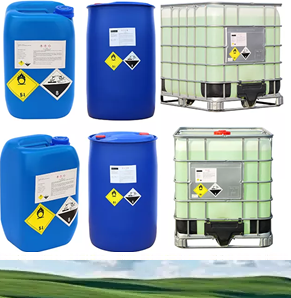
- Safety Compliance: We adhere to all international shipping regulations, including GHS labeling and SDS (Safety Data Sheet) documentation.
- Bulk Capabilities: Whether you are a small research lab needing 500 grams or a large manufacturing facility requiring multiple metric tons, we have the infrastructure to support your supply chain.
- Expert Support: Our team of chemists is available to discuss which purity grade is best suited for your specific chemical synthesis or manufacturing application.
Ready to place an order? Visit our contact and ordering page to receive a custom quote for your requirements.
Emerging Trends: The Future of Purity and Sustainability
As the global industry shifts toward “Green Chemistry,” the definition of a 95% pure chemical is evolving. Sustainability is no longer just about the target compound; it is about the nature of the 5% impurity.
Green Solvents
We are seeing a massive increase in demand for “greener” solvents that maintain 95% purity standards while offering better biodegradability profiles. At ChemicalsSuppliers.com, we are actively expanding our catalog to include bio-based solvents that meet the high-performance requirements our customers expect.
Digital Tracking and COA
We are implementing blockchain-based tracking for our products. This allows our clients to trace the manufacturing history of their chemicals, ensuring that the 95% purity concentration is consistent from the raw material origin to the point of delivery.
Frequently Asked Questions (FAQs)
Q: Why isn’t 100% purity possible?
A: In absolute chemical terms, 100% purity is a theoretical limit. Even in ultra-pure vacuum conditions, there are always trace residues of the container or the atmosphere. 95% is a highly practical, achievable, and reliable benchmark for industrial utility.
Q: Can I request a higher purity than 95%?
A: Yes. At ChemicalsSuppliers.com, we offer various grades, including 99%, 99.9%, and analytical reagent grades. Please contact our sales team to inquire about specific compounds.
Q: Does the 95% purity change with shelf life?
A: Chemical stability depends on the compound. Some chemicals are hygroscopic (they absorb water from the air), which can dilute the purity over time if not stored correctly. We provide detailed storage guidelines with every product to ensure your 95% concentration remains stable.
Q: What is the lead time for bulk orders?
A: Lead times vary based on the item and quantity. We maintain significant local inventory for most common reagents, allowing for shipping within 48–72 hours. Larger bulk orders can be coordinated through our procurement portal.
Supporting Your Success
At ChemicalsSuppliers.com, we believe that chemistry is the foundation of innovation. Whether you are developing the next generation of semiconductors, refining pharmaceutical ingredients, or optimizing industrial cleaning, your success is our mission.
Understanding the nuance of 95% chemical purity concentration percentage allows you to make informed decisions that save money without compromising the integrity of your work. We invite you to explore our website, browse our extensive product list, and reach out to our team to discuss how we can become your trusted partner in chemical procurement.
Quick Reference: Why Choose ChemicalsSuppliers.com?
- Verified Purity: Every batch is tested.
- Competitive Pricing: Direct-to-consumer/industrial pricing.
- Global Logistics: Efficient, safe shipping worldwide.
- Technical Expertise: Access to expert advice on chemical selection.
- Reliability: Long-standing reputation in the chemical supply industry.
Visit us today at https://www.chemicalssuppliers.com/ to start your journey toward high-quality, reliable chemical procurement.
Disclaimer: Safety First
All chemicals should be handled by trained professionals. Always refer to the Safety Data Sheet (SDS) provided with your purchase. Ensure proper personal protective equipment (PPE) is used at all times. ChemicalsSuppliers.com is committed to safe and ethical chemical distribution.
Expanded Technical Breakdown: Common High-Usage Chemicals at 95% Purity
To provide further value to our readers, let’s dive deeper into some specific chemical groups that are most effective at the 95% concentration level.
1. N-Methyl-2-pyrrolidone (NMP)
NMP is a powerful polar aprotic solvent. At 95%+ purity, it is widely used in the production of lithium-ion batteries and as a paint stripper. The presence of the remaining 5% does not typically interfere with its solvent properties in industrial stripping or polymer dissolution.
- Application: Electronics manufacturing, solvent cleaning.
2. Dimethyl Sulfoxide (DMSO)
DMSO is a versatile solvent used in chemical synthesis and, in some cases, as a cryoprotectant. A 95% technical grade is standard for industrial synthesis where water content is not the limiting factor.
- Caution: Always ensure the impurity profile (specifically the presence of sulfur compounds) matches your reaction requirements.
3. Propylene Glycol
While often used in higher grades for food and pharma, the 95% grade is an excellent industrial antifreeze and heat transfer fluid. It is highly cost-effective for large-scale logistics.
How to Read a Certificate of Analysis (COA)
When you receive your order from ChemicalsSuppliers.com, you will receive a COA. Understanding this document is critical to verifying the 95% concentration:
- Assay/Purity Value: This is the main percentage. If it says “≥ 95%,” you are within your specifications.
- Water Content (Karl Fischer): This tells you how much of the remaining 5% is moisture.
- Residue on Ignition/Non-Volatile Matter: This tests for inorganic contaminants.
- Appearance: Ensures the product is free from discoloration or suspended solids.
By checking these four markers, you can be 100% certain that your 95% purity compound is exactly what you need for your reaction or process.
Conclusion: Bridging the Gap Between Cost and Performance
The choice of purity grade is a critical strategic decision. By choosing 95% purity, you are opting for the “Smart Choice”—a blend of fiscal responsibility and technical performance that powers the global economy.
Don’t settle for unverified sources. Rely on the experts at ChemicalsSuppliers.com to provide the quality, documentation, and logistical support you need to keep your operations running smoothly.
Join thousands of professionals who trust ChemicalsSuppliers.com for their chemical needs.
External Resources for Further Learning
Tags
#ChemicalPurity #95PercentPurity #IndustrialChemicals #ChemicalSupply #ChemicalsSuppliers #LaboratoryReagents #ChemicalProcurement #QualityControl #ChemicalManufacturing #SolventSupply #ResearchChemicals #BulkChemicals #MaterialScience #ChemistryIndustrial #PurityConcentration #ChemicalDataSheet #QualityAssurance #ChemicalDistribution #GlobalChemicalMarket #IndustrialSynthesis #ScienceAndTechnology #LabSafety #ChemicalSafety #ChemicalEngineering #RawMaterials #ProcurementStrategy #ChemicalSpecs #ScientificResearch #SupplyChainExcellence #ChemicalAnalysis #PurityStandards